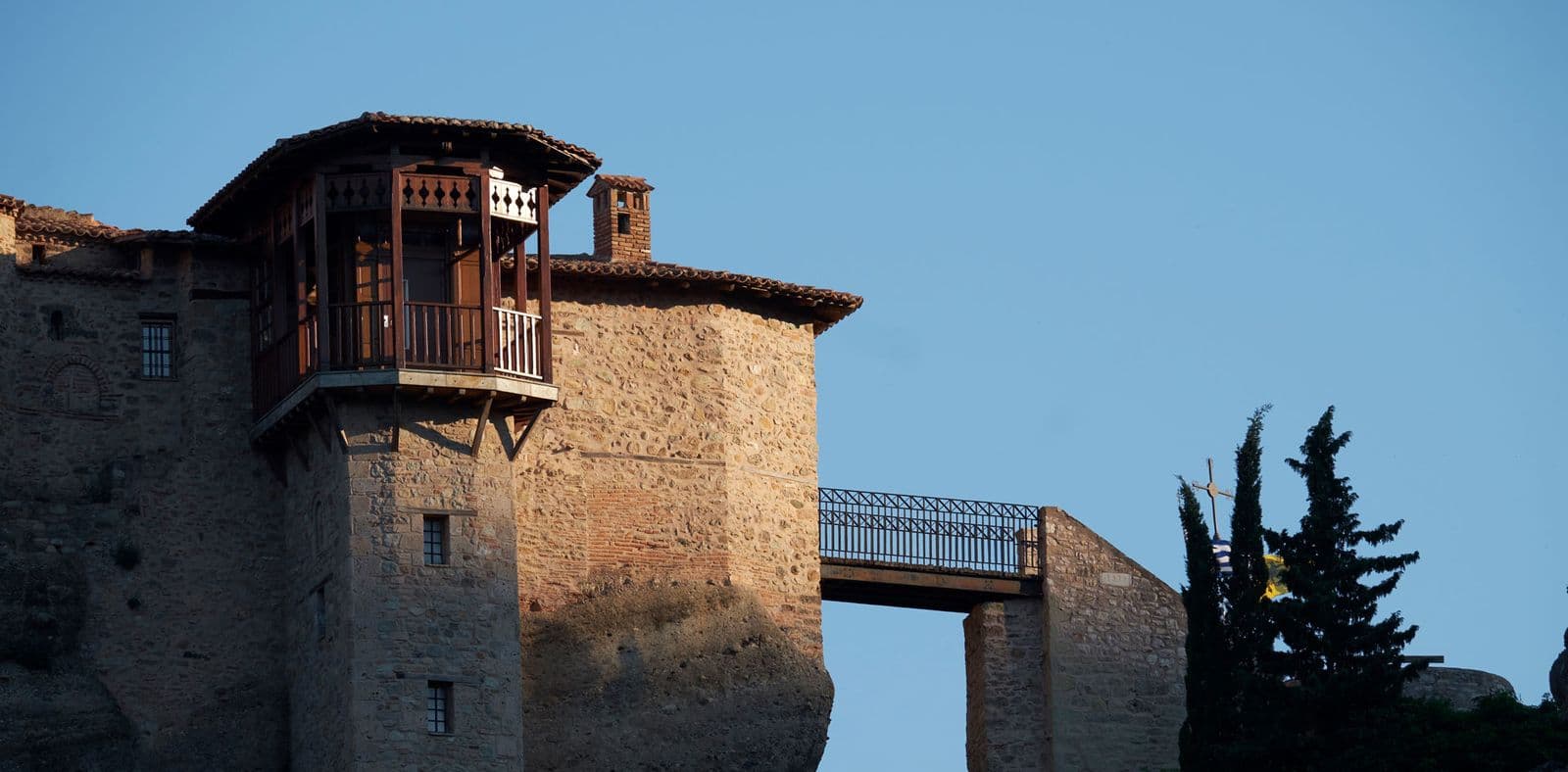
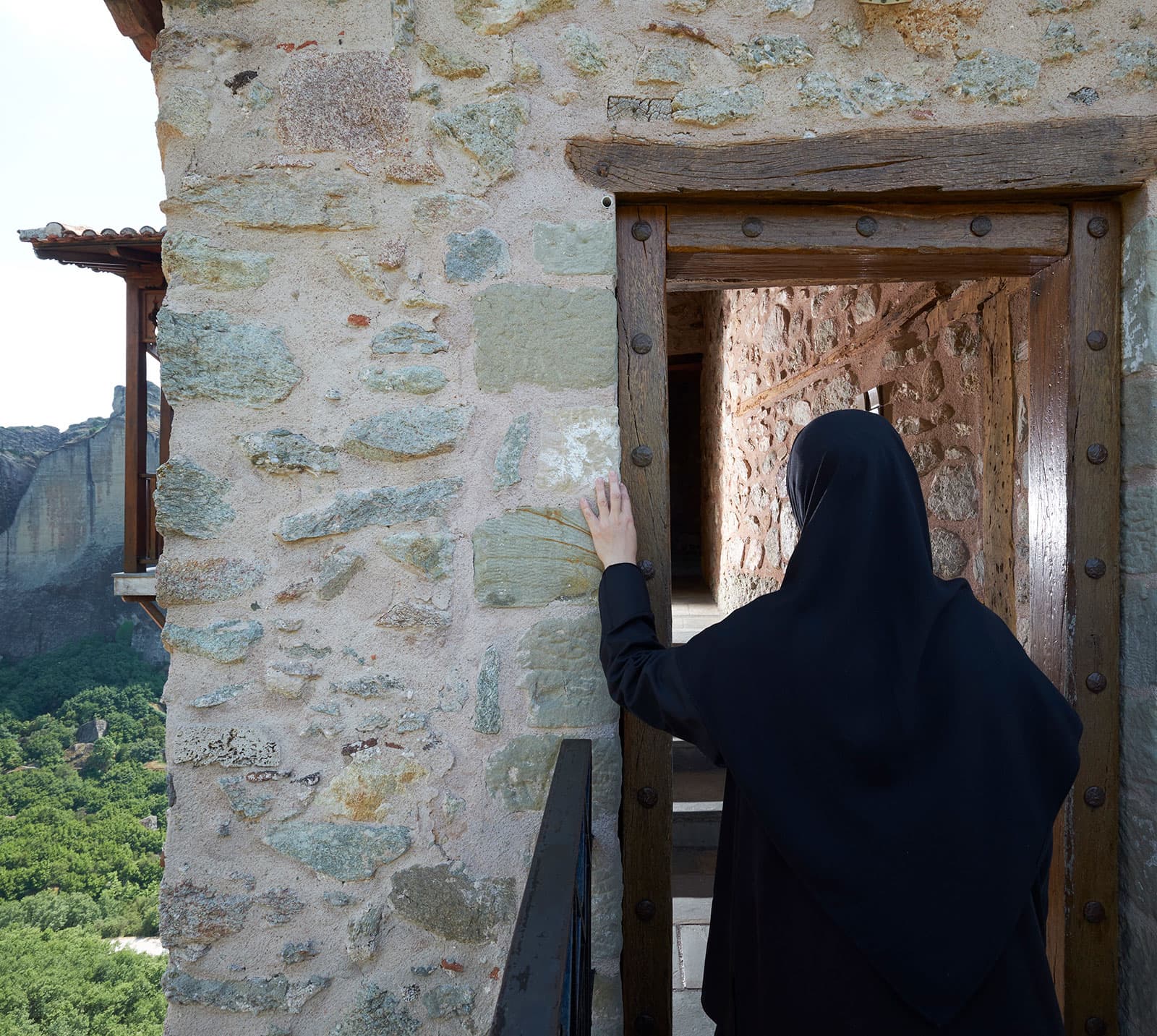
The main means of access to the monastery is via the northwest side, which was configured in the 1990s. Formerly the monastery had been accessible on the east side via a rope-ladder and a net that would have been raised from a lower level of the rock. For centuries this had been the only means of access, as recorded in many written sources, principally by foreign travellers of the 18th and 19th centuries.
Upon arriving at the lowest part of the monastery, the visitor or pilgrim is greeted by a beautifully tended flower garden, with a large pine tree at the edge. From here there are two hundred and six steps up to the main part of the monastery, although the visitor may rest on the way at several terraces and wooden benches, under the shade of oak and yew trees.
Towards the end of the ascent two small bridges suddenly come into view; these must be crossed in order to reach the monastery. One cannot fail to admire the view from the first bridge of the flower beds and pots below, containing a great variety of roses, begonias, mallows, honeysuckle, and, of course, swathes of basil (which, with its central flowery heart, is typical of every Greek home). The visitor can be in no doubt, for the orderliness and flower gardens betray the fact that this is a nunnery.
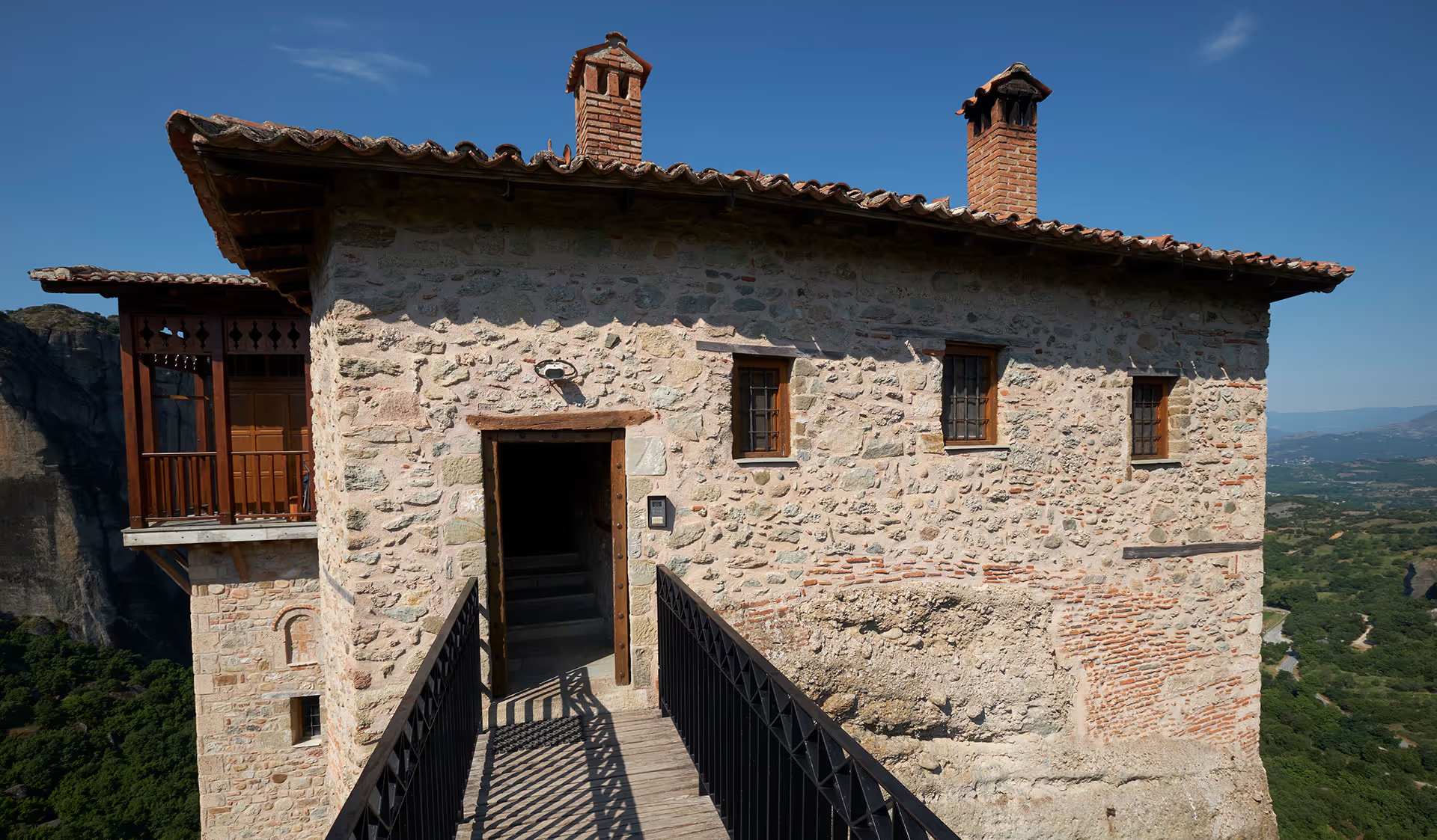
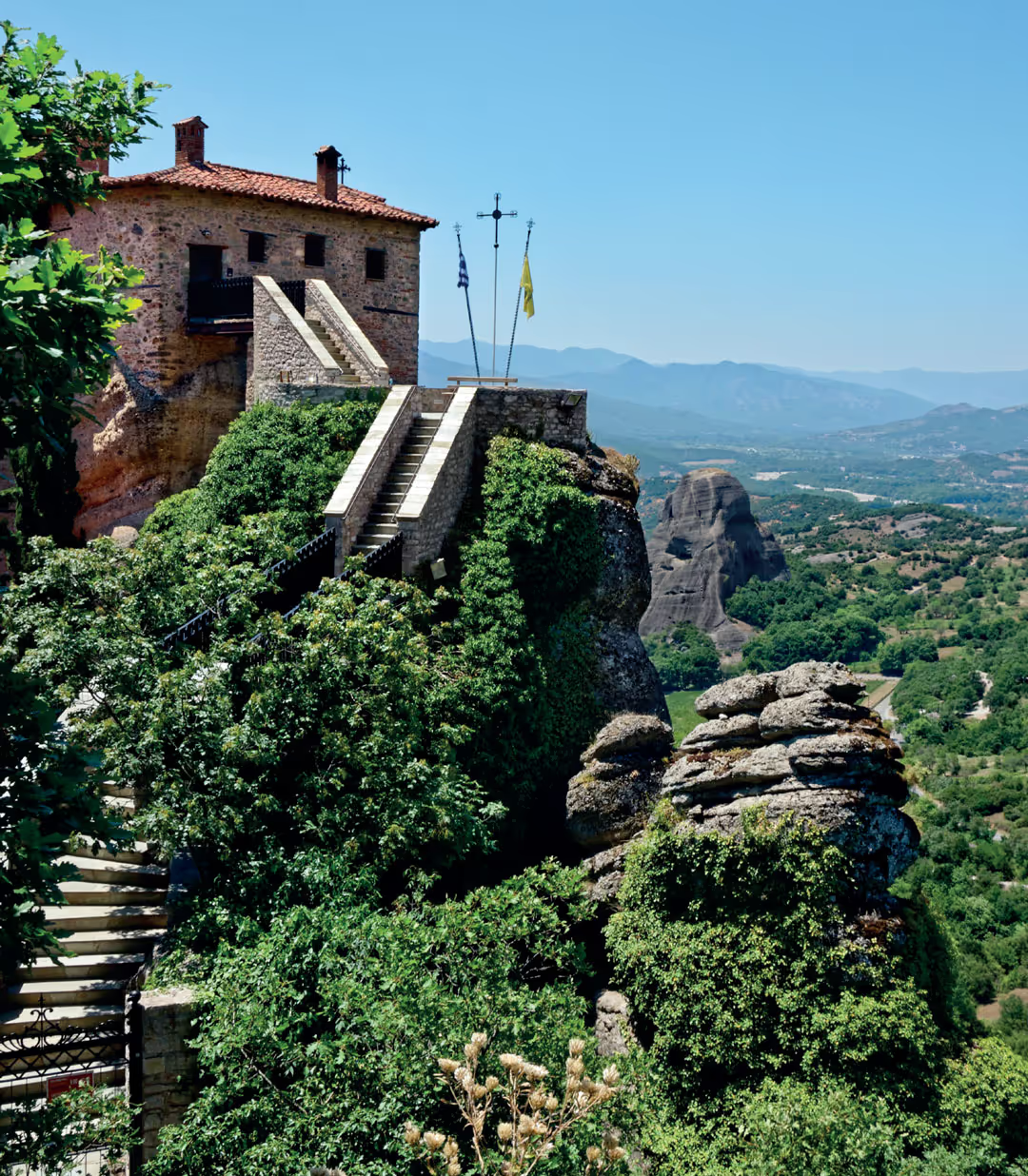
A few steps higher up one reaches a small rock pillar. In all likelihood this was the place chosen by the founders to build the first monastery here, Palaio Roussanou or Old Roussanou. The entire circular surface is enclosed by a wall, on the northwest side of which flies the Greek and Byzantine flag. Here, one can rest and enjoy the landscape before walking up the last steps. One crosses the smaller and level second bridge, and finally the monastery’s threshold comes into view.
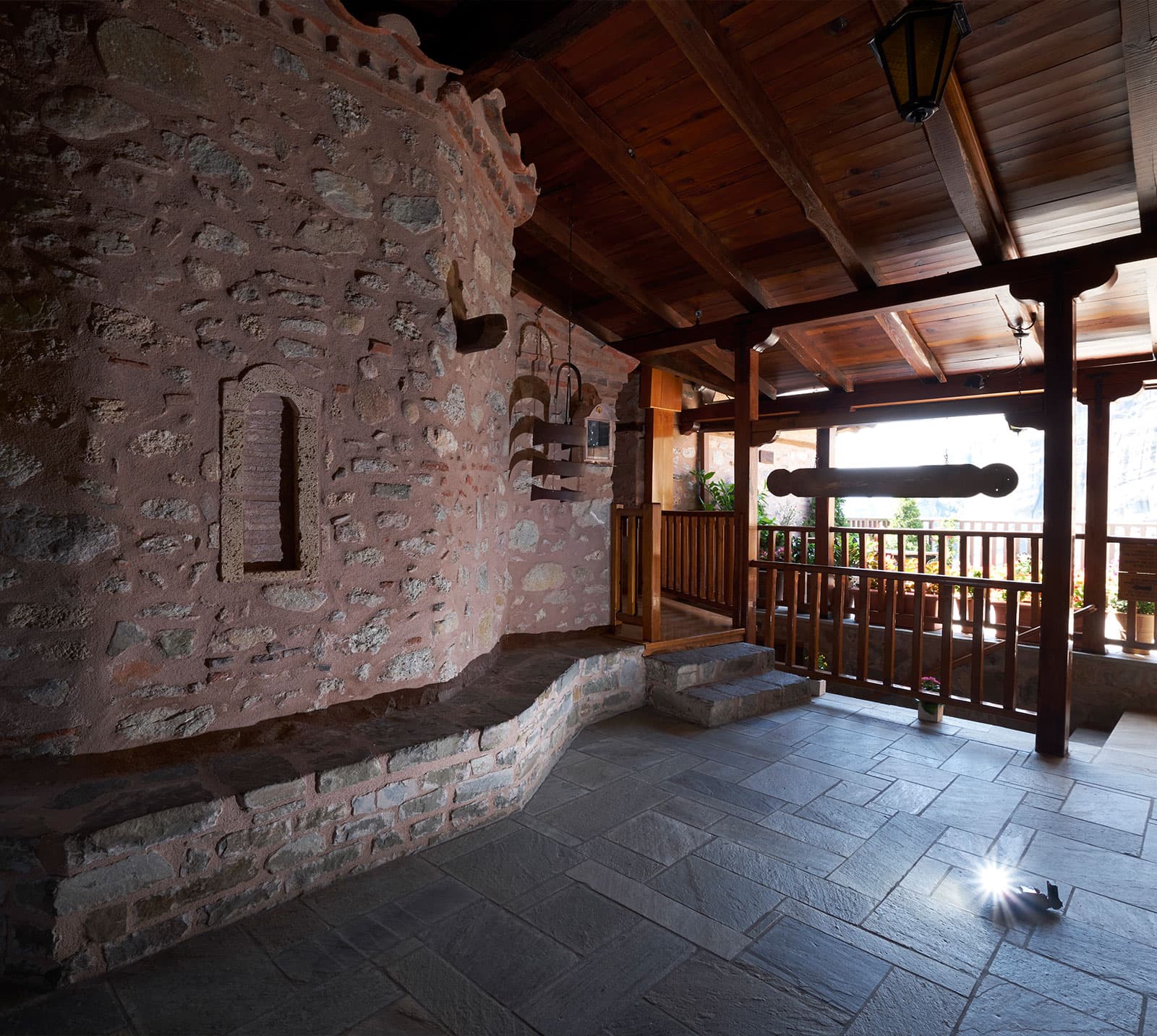
Through the main gate lies a narrow corridor. To the left lies the monastery’s old and weathered wooden door with its enormous key, the net or basket hoisting mechanism (vrizoni) that was used to carry people and things up to the monastery. The whole of the monastery is built on the rock, and with the exception of a small terrace, it is covered by one unified roof structure, with the dome of the katholikon the only projection.
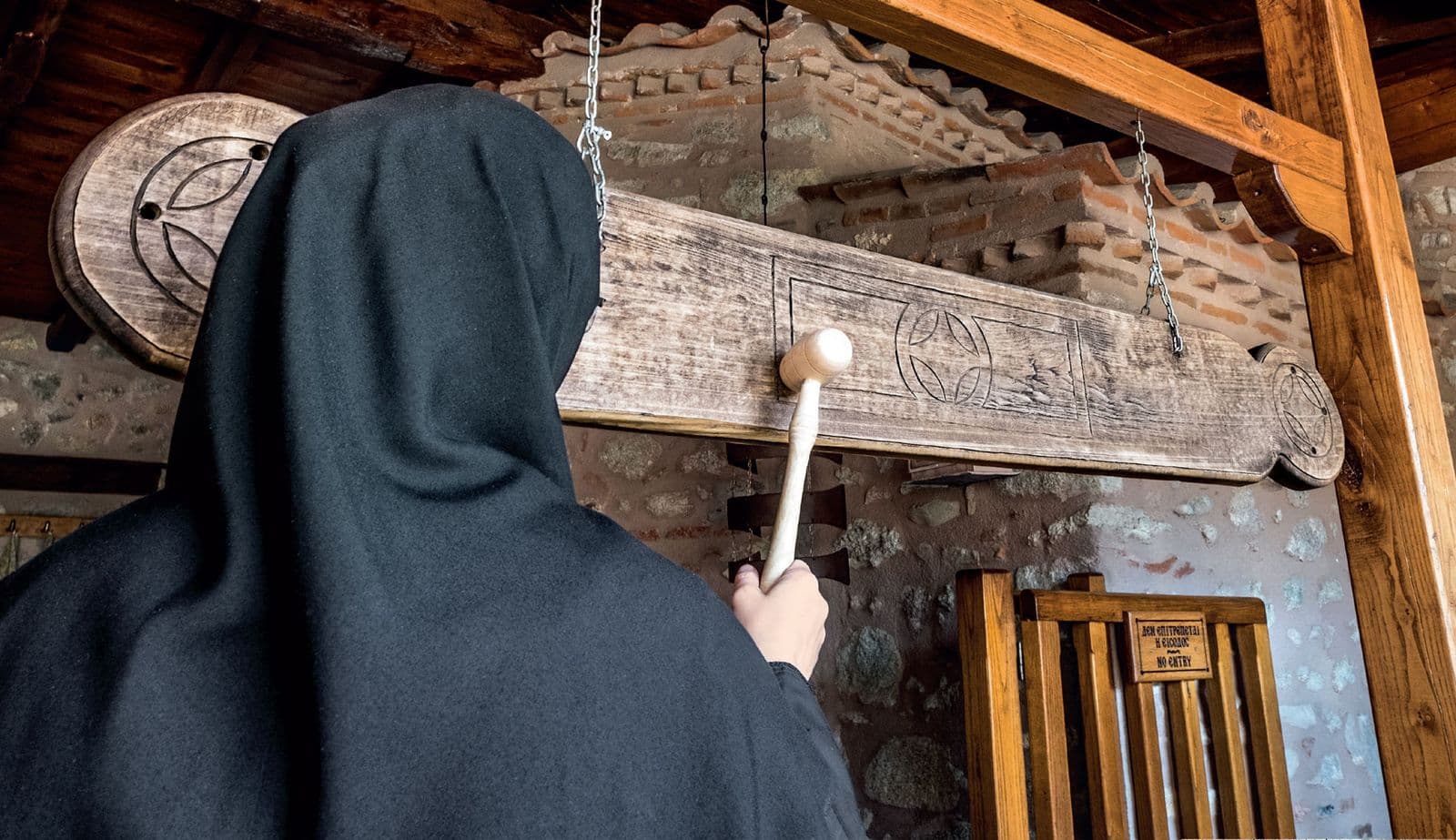
To the east of the main church are to be found the iron semantron and talanto, which are used to call the community to prayer, work, and silence. The bell tower, which was built in 1995, is situated on the north side. Beside the bell tower there is a terrace, where the visitor or pilgrim may marvel at the view and the monasteries of Meteora.
To the west there are some steps, at the base of which lies the outer narthex of the katholikon. This part of the building has a low wooden ceiling, supported by thick wooden beams. To the left one can see a wall-painting of the Ladder of the Virtues of St John Climacus: monks are shown climbing the ladder, helped by angels and fought by demons; some are shown reaching the top, where Christ awaits to crown them; some are depicted falling to hell just before they come to the end of the ladder. This is surely a place where one can reflect on one’s spiritual state and reevaluate one’s path in life.
Further on to the left lies an ornate icon of St Barbara, the patron saint and guardian of the monastery.
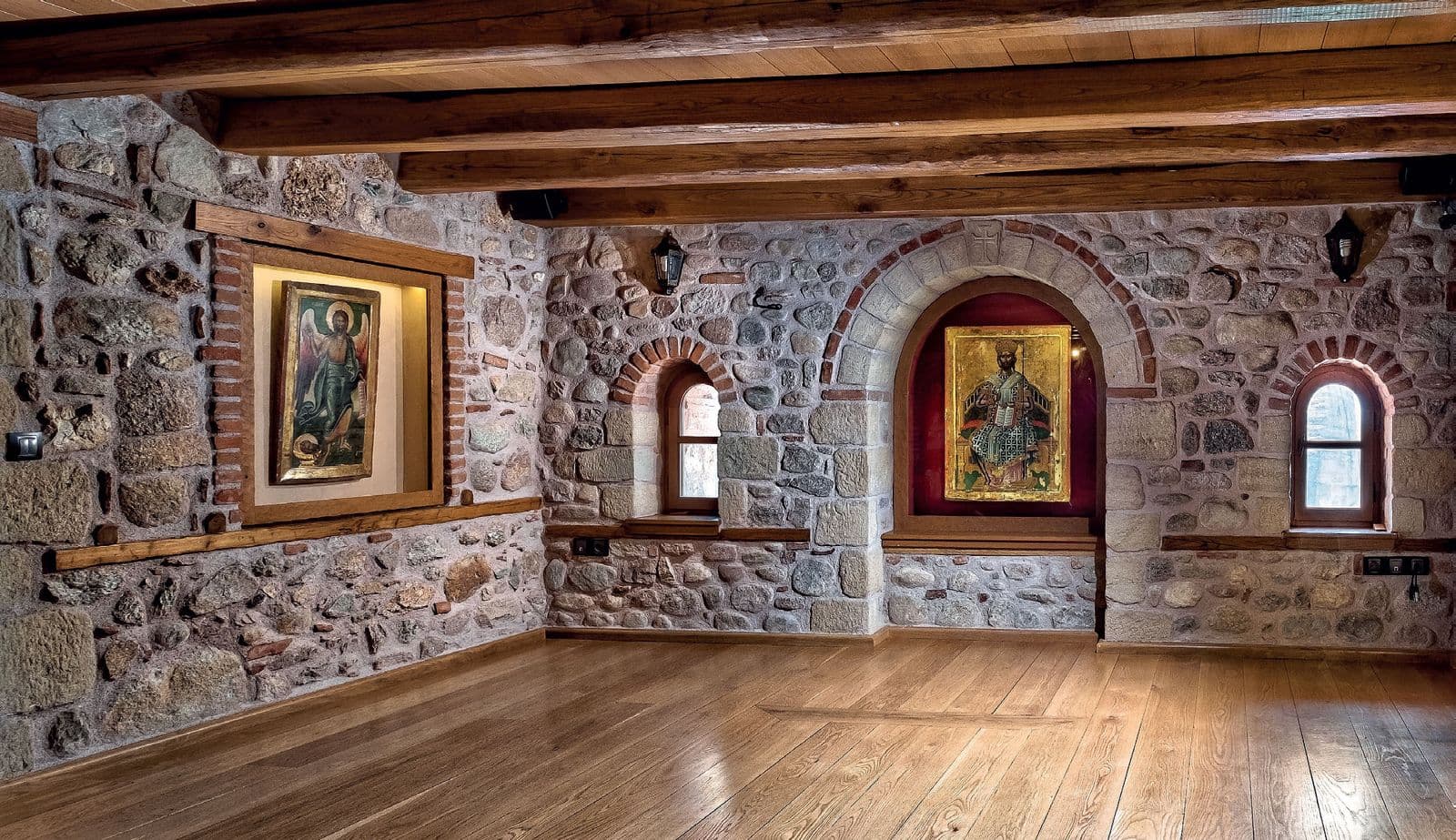
Straight ahead one can see several display cases, containing some of the monastery’s old treasures and icons; these were placed here in 2014.
The oldest and most impressive icon to be found in the church represents Christ enthroned as the King of Kings and Great High Priest. This sixteenth-century icon is Cretan in style and is thought to be by Theophanes the Cretan.