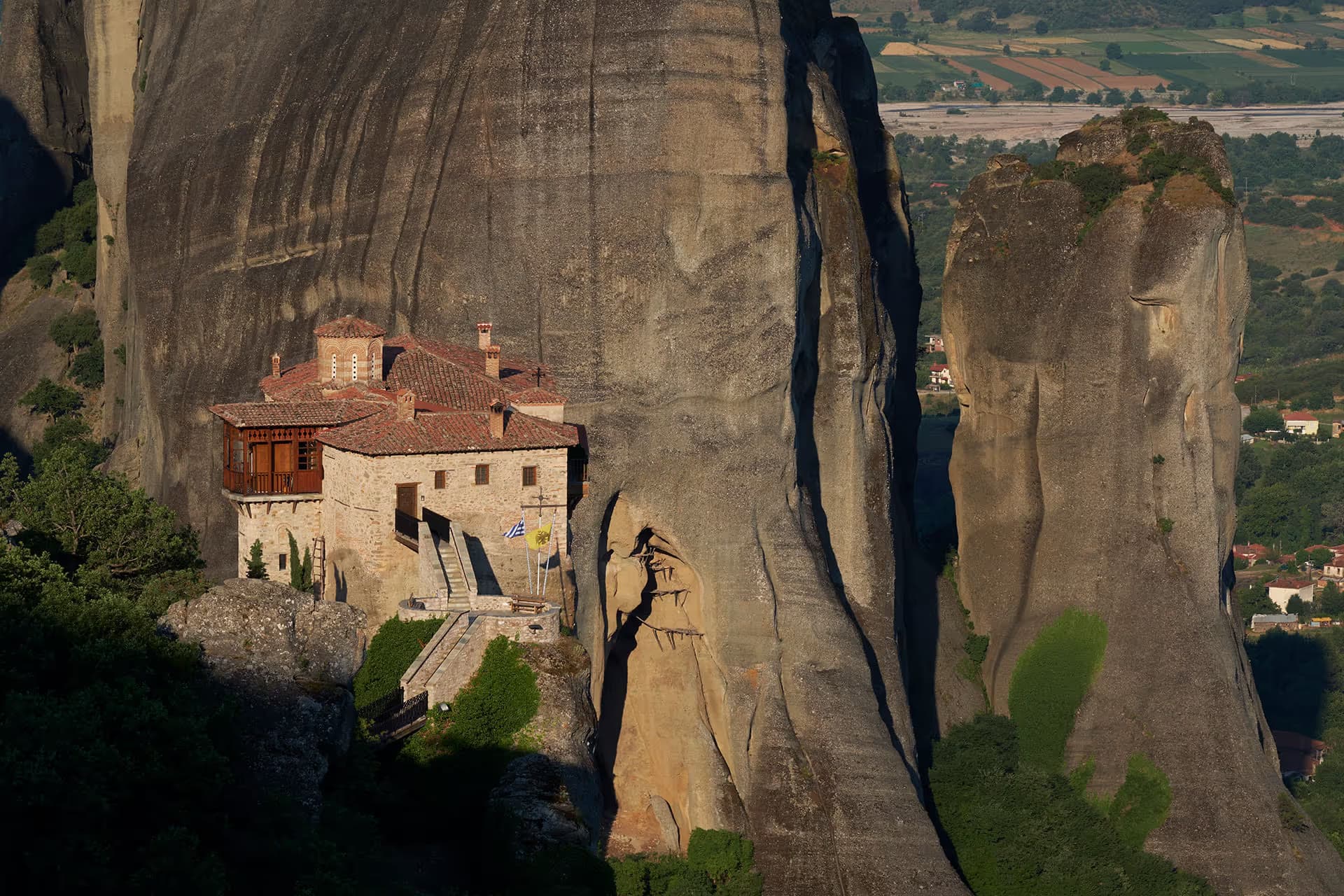
Manuscripts
The study of the monastery’s manuscripts began in the early 20th century by Ioannis Vogiatzidis, a headmaster in the town of Kalambaka, and was continued later by Adamantios Adamantiou, from the state Ephorate of mediaeval monuments. They were researched and recorded in more detail by the Byzantinist Nikos Veis (1883-1958), who arrived at Roussanou for the first time on 4 October 1908. From December 1909, and with the assistance of the monks Chrysanthos Athanasiou and Agathangellos Petropoulos (who was a monk at the Monastery of the Holy Trinity), Veis recorded fifty-two manuscripts. Since the monastery was half-ruined and abandoned, Veis left eight manuscripts there for its liturgical needs and transferred forty-four to the neighbouring monastery of the Holy Trinity for safekeeping. Later the manuscripts were moved to the monastery of St Stephen.
During the German Occupation (1941-1944), Father Christos Bentas from Kalambaka (1883-1979), Secretary of the Metropolis of Tricca and Stagoi, was instrumental in saving and preserving the manuscripts of the monasteries of Meteora by hiding them in crypts or transferring them to other safe locations.
The systematic study and recording of the manuscripts was begun in 1985 by Dimitrios Sofianos, a professor at the Ionian University and Director of the Research Centre for Medieval and Modern Hellenism of the Academy of Athens. In December 2007, Sofianos completed his work in a separate edition of the manuscripts, which was published in one volume in 2009, a year after his death.
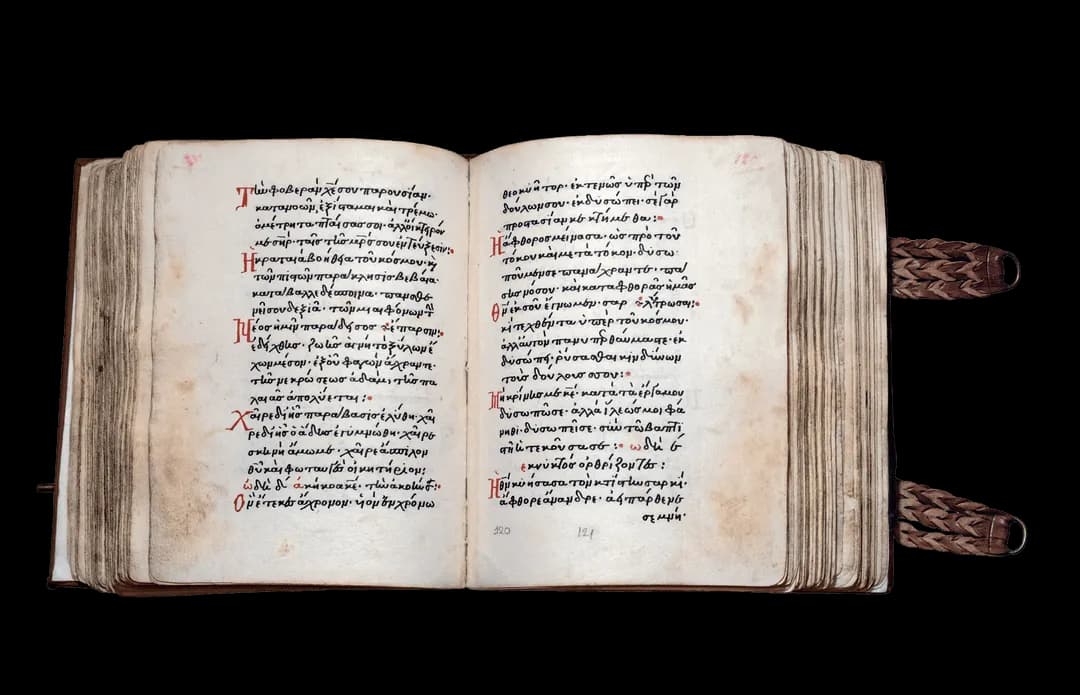
On 20 March 2009, one hundred years after first being recorded by Veis, the forty Roussanou codices were returned by the monastery of St Stephen to Roussanou, where they are now kept. There are plans for them to be exhibited in a specially-designed area.
That same year a specialist conservationist completed the restoration of Roussanou’s codex number 30. The codex, containing the Theotokarion (hymns to the Mother of God) and the Akathist Hymn, was written in around 1565 by the monk Parthenios, a codex copyist at the monastery. Future plans for the restoration and full photographic recording of the entire collection will help make these manuscripts accessible to the public and researchers.
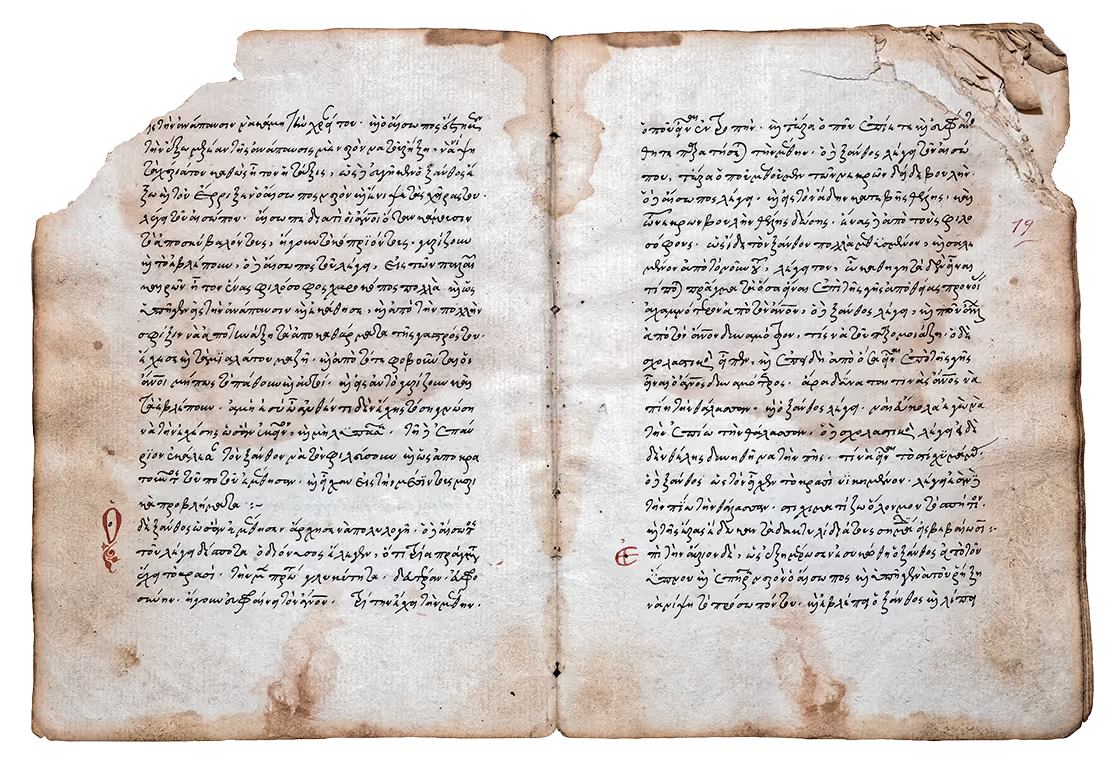
The monastery’s codices were written between the 13th and 19th centuries, and most are ecclesiastical in content, as is to be expected. They contain mainly liturgical books, Menaions, Paraklitiki (hymns of the eight tones), Synaxaria, homilies of the Church Fathers, and books on dogmatics.
It is worth mentioning the first, the third and the sixteenth codices (according to Sofianos’s record), which are the oldest and date from the 13th century. The third codex, dated 1285, bears a note by (it is thought) the monastery’s founder, Maximos, and the memorial record of the dormition of two other abbots of the monastery, Neophytos and Euthymios.
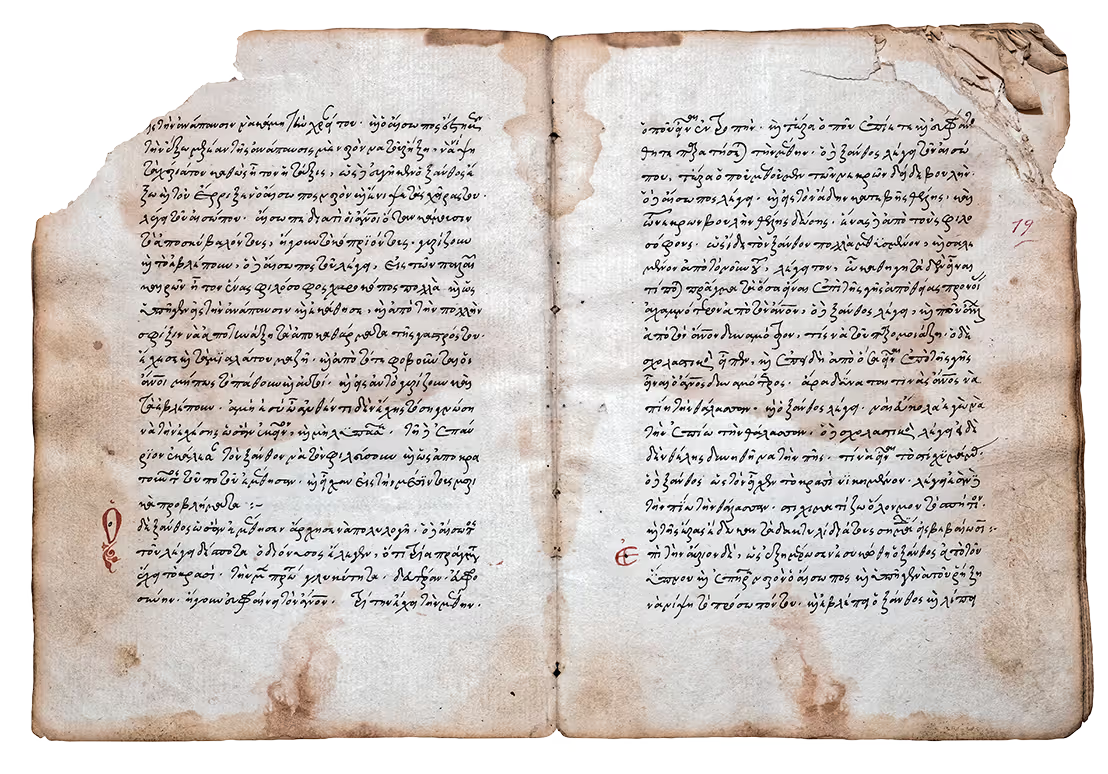
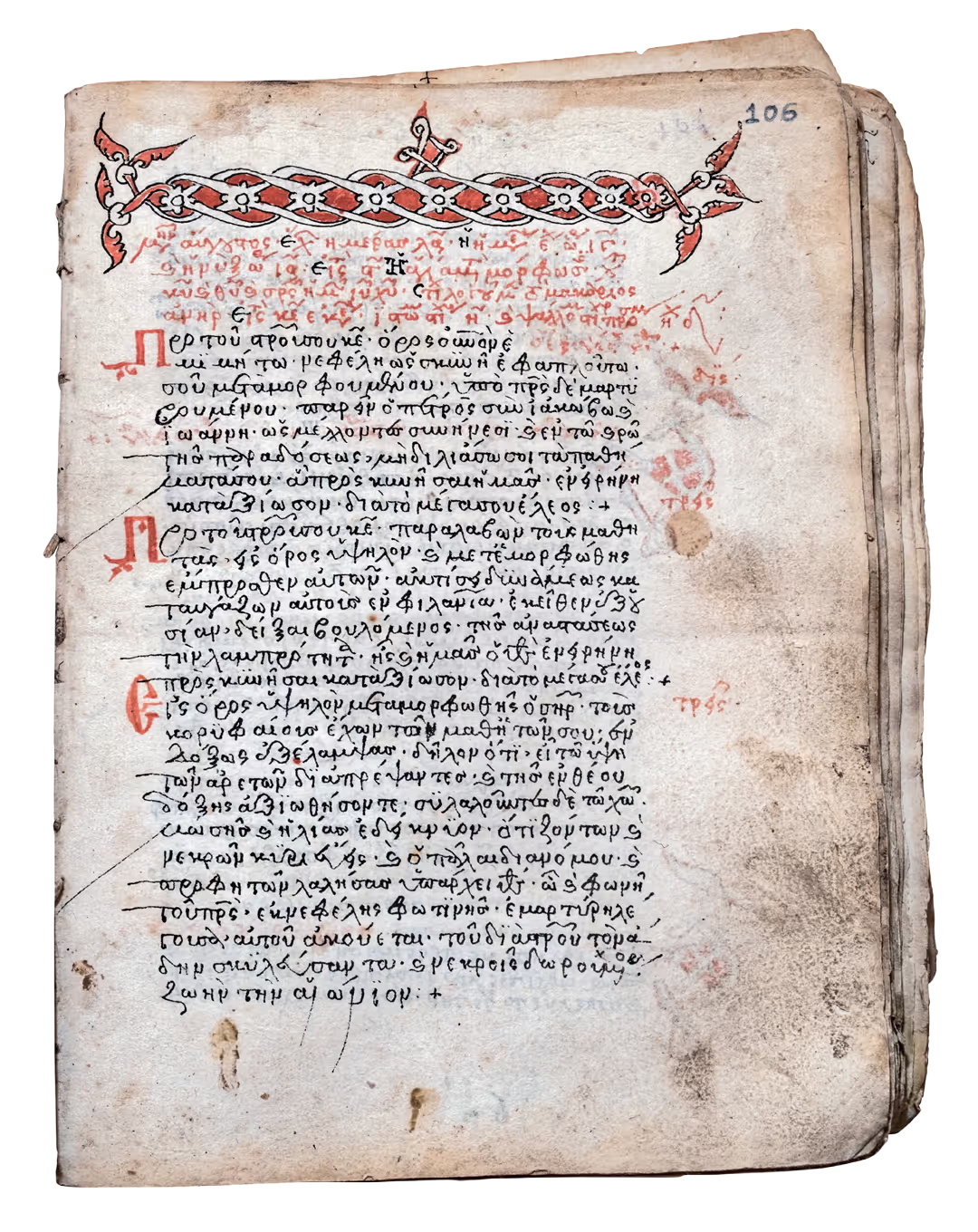
Codex number 35, which dates from the 14th century, contains the typicon of the Monastery of the Pantokrator, the ruins of which are to be found on the rock of Doupiani, just outside the village of Kastraki. Codex 36 contains the typicon of the monastery of “the most notable of the Apostles Peter and Paul.” In a note, dated 1601, in this codex we learn—among other things—that it snowed on Easter Sunday, which that year was celebrated on April 14.
Codex number 46, also dating from the 14th century, contains the will of a person named Manouil Ioannakis. This document provides a lot of information about the area of Stagoi and Meteora.
Finally, the noteworthy music codex, number 20, dating from the 14th century, is illustrative of the chanting tradition of Thessaloniki. A note written on the front of the inner cover of the wooden binding reads: “this allelluarion [hymn] was written in the year 6889=1380/81, June 13th.”
During the 16th century, a manuscript workshop operated in the monastery. Unlike those at the monasteries of Ypsilotera and Varlaam it was not systematically organised, but a number of scribes, codex copyists and calligraphers worked to meet the needs of the coenobium. Codex number 25, containing a folk adaptation of Aesop’s life, also dates from the 16th century.
The monastery plans to apply to the National Library of Greece for the repatriation of three manuscripts, the most significant of these being the Testament of the Founders, Sts Joasaph and Maximos, and the monastery’s foundation document (scroll, number 1465), which in 1882 were removed from Meteora along with other manuscripts and were transferred to Athens, on the orders of the government of the time.
In closing, it is worth quoting the observations of Dimitrios Sofianos on the monastic codices: “These manuscripts, of known or unknown authorship, despite their palaeographic, historical, literary and artistic value, are also valuable religious treasures, like all objects and monuments of ecclesiastical art, and in any case—I emphasize this—they must not be treated like cold and soulless museum exhibits. This is why we must stand before them with respect and awe. These manuscripts, faded and yellowed by time and relentless wear, remain alive, and most importantly, they are sanctified and blessed by the trembling flame of the vigil lamp. Their priceless ornamentation is more eloquent than any other calligraphy or artistic creation. They are soaked by the dense drops of the holy candles, during the lengthy solemn services and the incessant and profound prayers of the monks: ‘Lord, have mercy upon me and forget me not!”
Holy Relics & Reliquaries
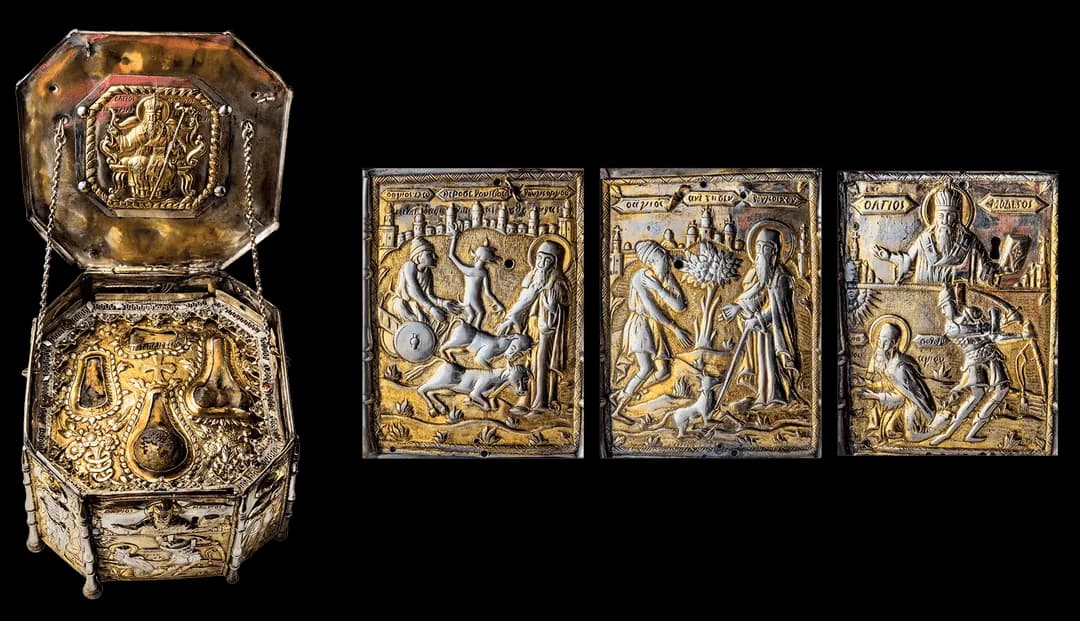
Like most orthodox monasteries, relics of saints are also kept in silver or silver-plated reliquaries at the monastery of Roussanou. They are usually to be found in the sanctuary of the katholikon; however, they are sometimes kept in chapels or in other places so that they may be venerated by pilgrims.
In the past, the holy relics were sometimes temporarily taken outside the monastery for the sanctification, blessing and spiritual support of believers. During periods of need and great difficulty, such as during the period of Ottoman rule, the monks of Meteora travelled to Thessaly, Macedonia and the countries of the Danubian basin with the holy relics in order to collect donations for their troubled monasteries.
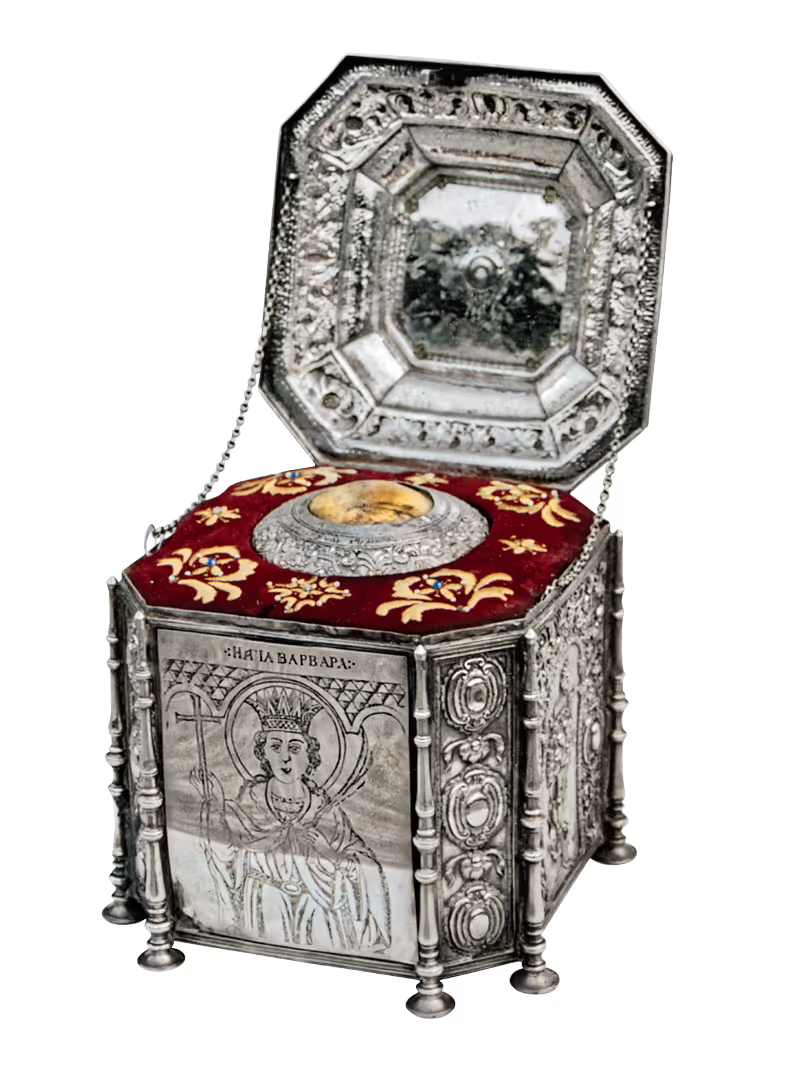
At the beginning of 1745 the Ukrainian monk and traveller Basil Grigorovich Barsky venerated the relics that were housed in the monastery, including the skull of the great martyr Barbara. The same relics were venerated in 1859 by the Russian archimandrite Porphyrius Uspensky, and the Russian archimandrite, Byzantinist and traveller Antonin Kapustin, who visited the monastery in 1865.
During the German Occupation (1941-1944), many of Roussanou’s treasures, which had in 1909 been transferred for safekeeping to the monastery of the Holy Trinity, were stolen or lost (along with items belonging to the host monastery). Some of these pieces were discovered in Trikala, and were gathered together and recorded by a committee selected by the Metropolitan of Tricca, Dionysios.
The reliquary with the skull of St Barbara is now to be found in Trikala Cathedral. It is displayed for veneration on 4 December, the saint’s feast day. The silver reliquary bears the inscription: “The holy and blessed skull of the holy martyr Barbara; property and treasure of Roussanou Monastery, Meteora.”
Roussanou now has a silver reliquary with fragments of the relics of the Great Martyr Barbara as well as relics of Sts Panteleimon, Prokopios and Modestos, and other silver-bound and wooden reliquaries containing the relics of other saints.