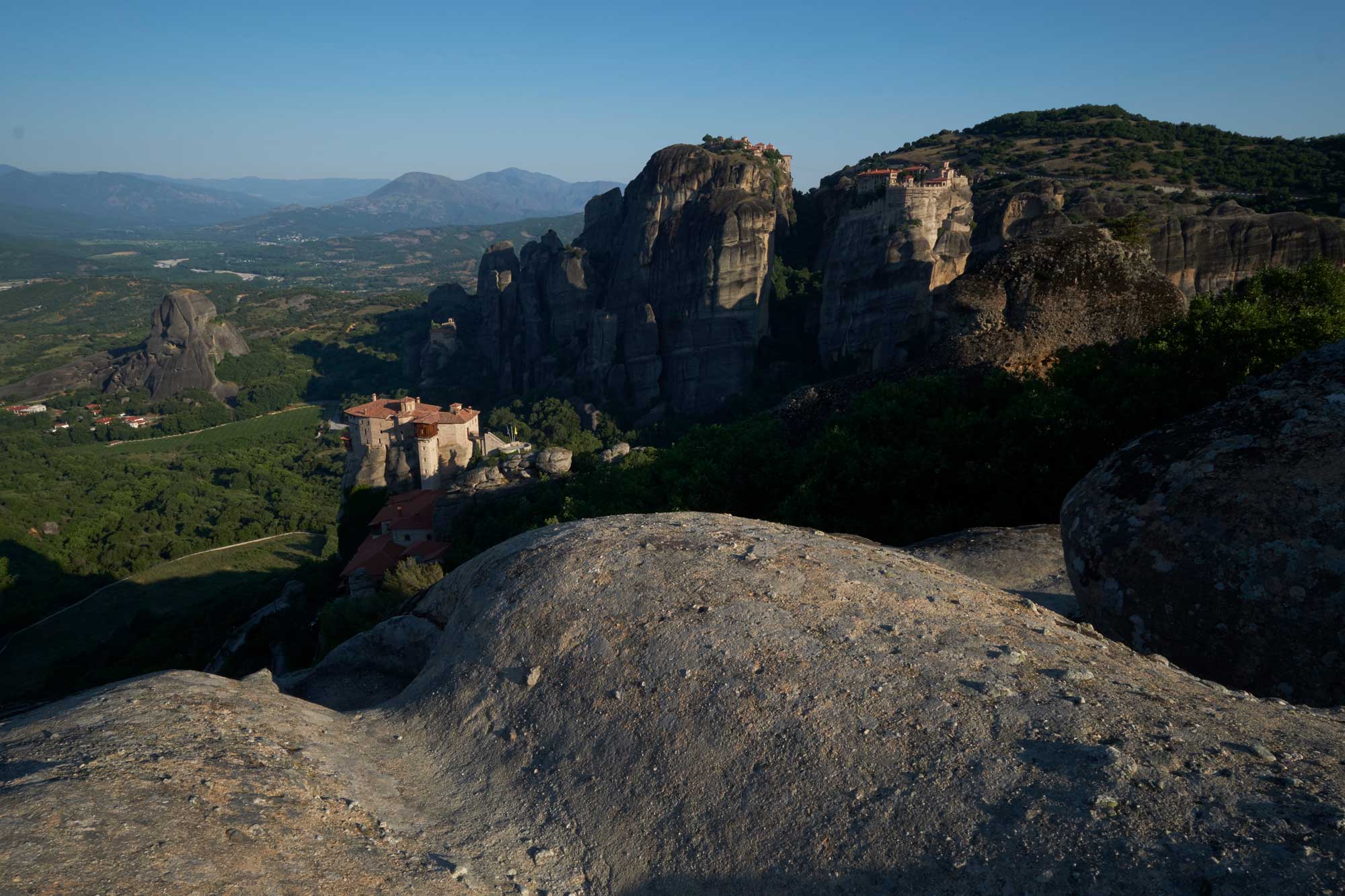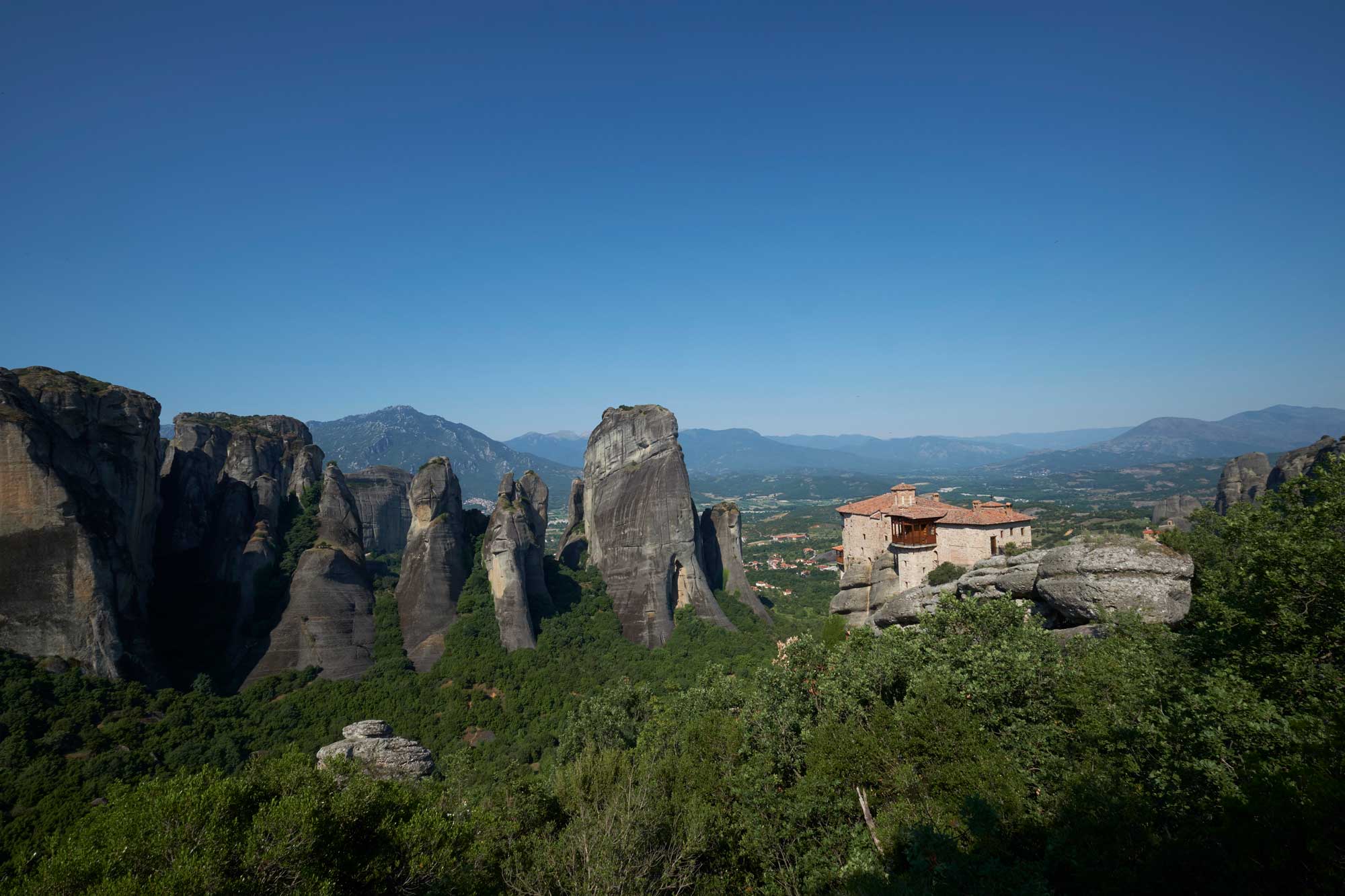
Around 300 to 200 million years ago, the area where Meteora now lies was submerged under the Pindos Ocean, and on the seabed there were four active submarine volcanoes. These volcanoes erupted, while the Pindos Ocean gradually subsided 84 million years ago.
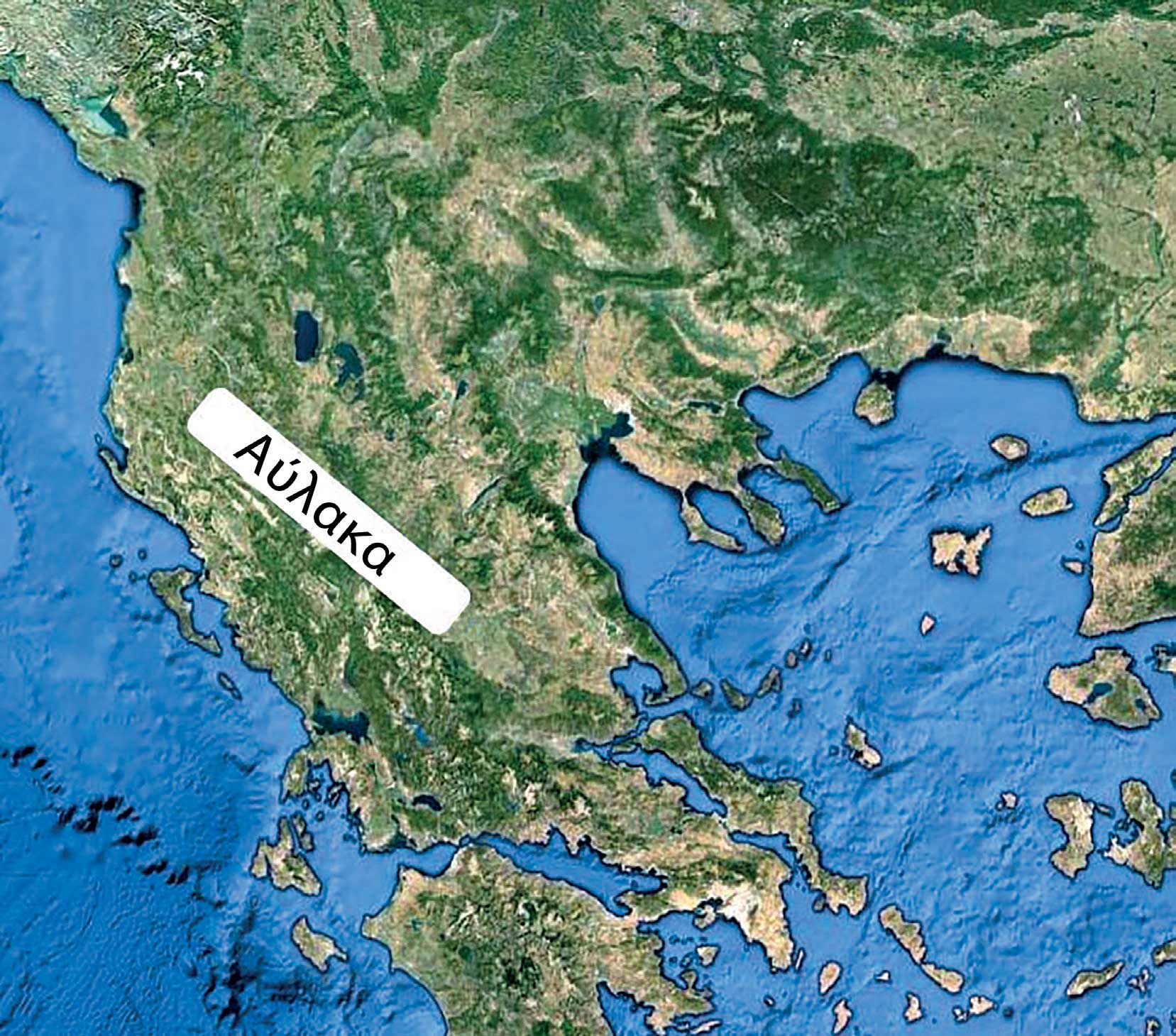
A series of severe tectonic events caused what is known as the Mesohellenic Trough to be formed in the area. This huge trench stretches from Albania in the north down towards the Greek town of Kalambaka.
Twenty million years ago this basin was covered by a marine environment, which was gradually replaced by rivers, lakes and swamps. Throughout the whole of this period molassic sediments were deposited on the waterbed, including cobblestone, sandstone, marlstone, gneiss, and mudstones. The rock pinnacles of Meteora were formed by these elements, which integrated in alternate layers. It is these alternate layers that now appear as parallel stripes of rock, even from afar.
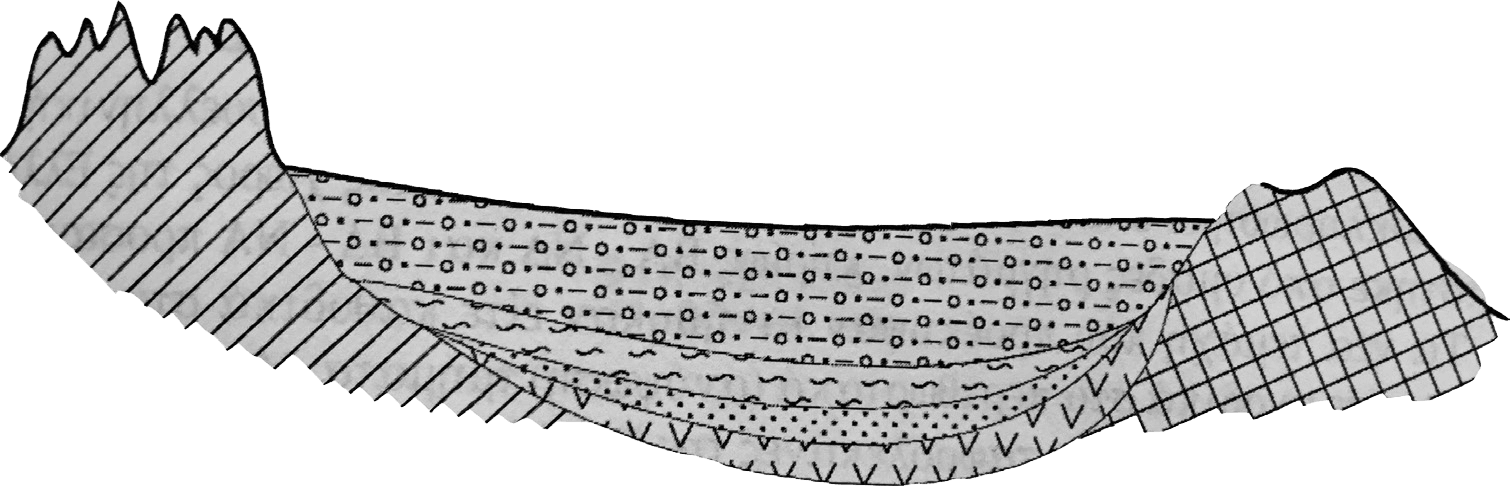
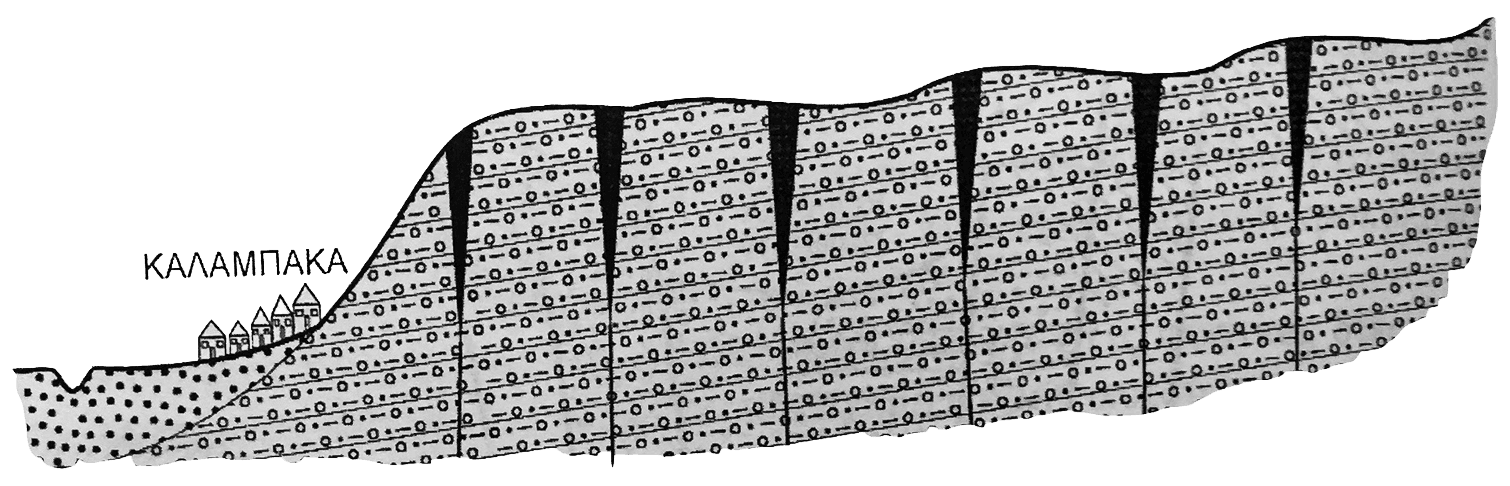
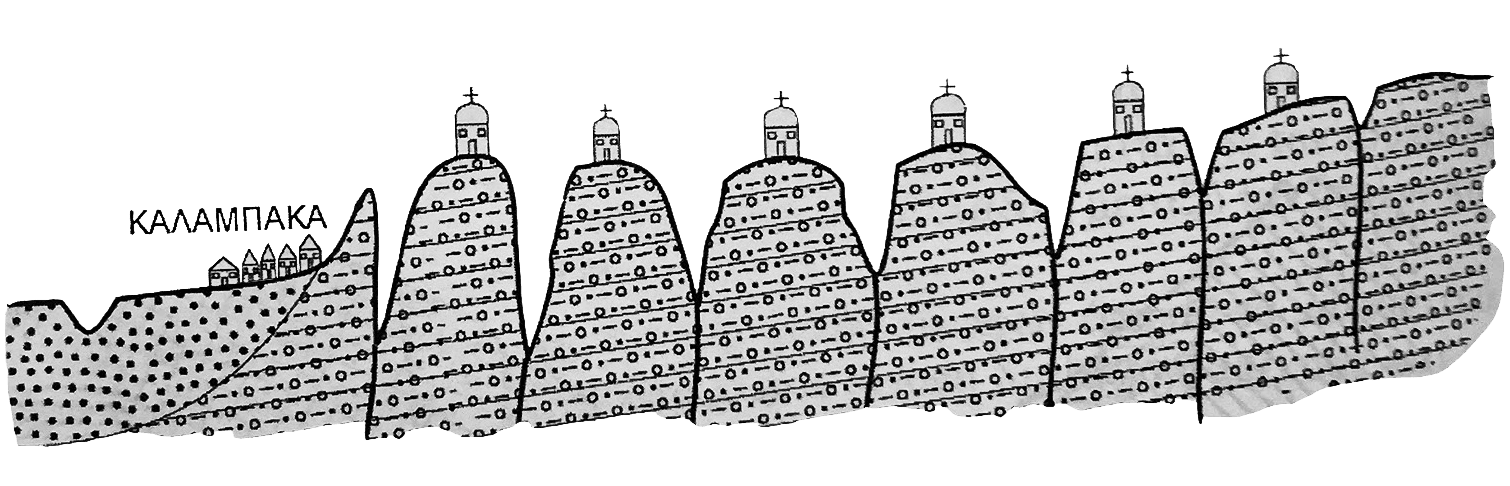
Five million years ago, the basin floor sunk down (this is where the plain of Thessaly is now to be found) and marginal segments were pushed upwards (where Meteora is now situated). Over time, these segments gradually began to be eroded. Initially superficial fissures appeared, while further water erosion caused various materials to be carried away and narrow valleys to appear between the rocks. While aeolian erosion played a secondary role in the formation of the rock pinnacles of Meteora, it contributed to the formation of the caves.
Meteora took on its present appearance ten to twenty thousand years ago, although the process of erosion still continues, albeit at a very slow rate.